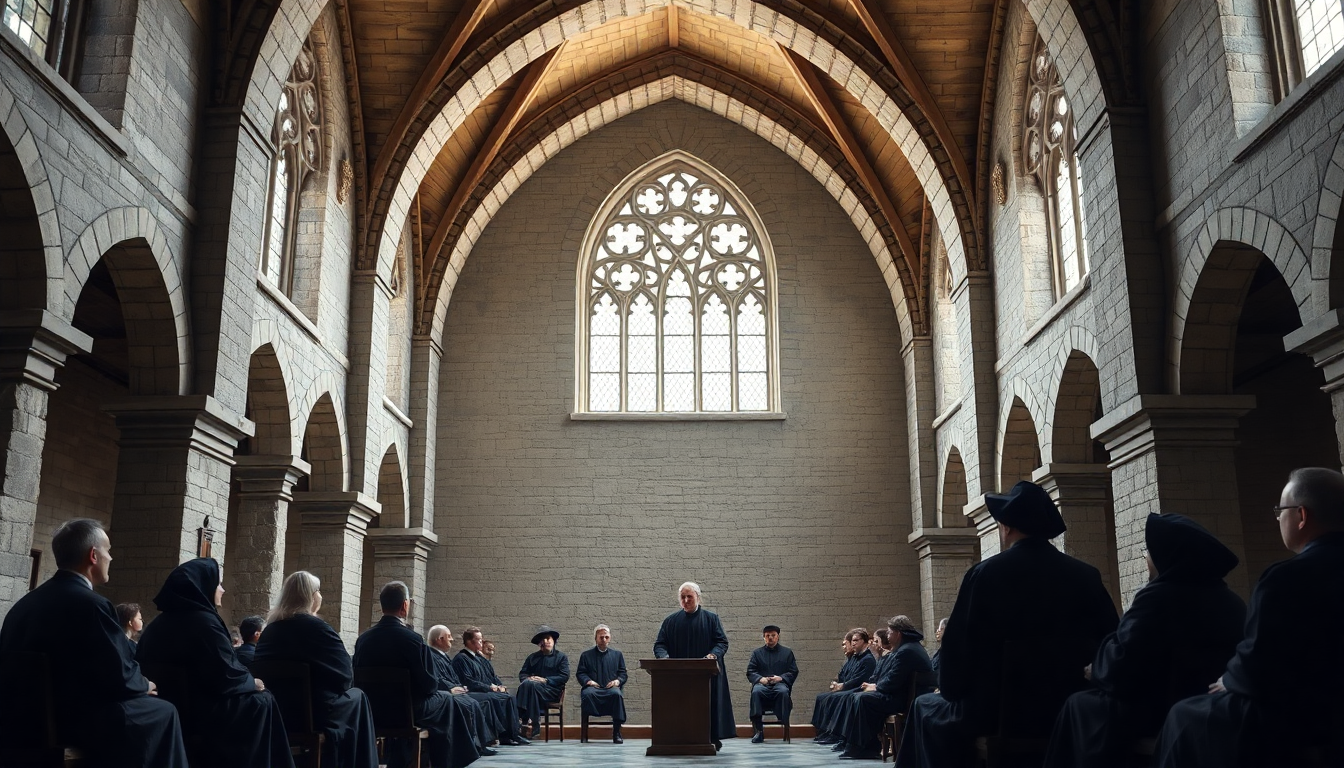
The Origins of the English Parliament from the Magna Charta

📑 5 slides 👁 30 views 📅 2/6/2026
0.0 (0 ratings)

Introduction: Magna Charta's Significance

The Magna Charta, signed in 1215, limited royal power and established legal principles.

Introduction: Magna Charta's Significance
2

Magna Charta's Key Clauses

  • Clause 39 guaranteed the right to a fair trial, a cornerstone of justice.
  • Clause 12 restricted arbitrary taxation without baronial consent.
  • Clause 61 created a council of 25 barons to oversee the king's adherence.
  • These clauses shifted power from monarchy to collective governance.
Magna Charta's Key Clauses
3

From Magna Charta to Parliament

  • Simon de Montfort's 1265 Parliament included knights and burgesses, expanding representation.
  • Edward I's Model Parliament (1295) established regular meetings with diverse members.
  • By 14th century, Parliament split into Lords and Commons, mirroring modern structure.
  • Taxation approval became Parliament's key power, limiting royal authority.
From Magna Charta to Parliament
4

Evolution of Parliamentary Power

  • 14th century saw Commons gaining equal legislative authority with Lords.
  • Petition of Right (1628) and Bill of Rights (1689) expanded parliamentary supremacy.
  • Glorious Revolution (1688) cemented Parliament as England's governing body.
  • This evolution traces directly back to Magna Charta's principles.
Evolution of Parliamentary Power
5

Conclusion: Lasting Legacy

  • Magna Charta's principles shaped constitutional monarchy and representative government.
  • Modern democratic systems globally draw inspiration from this English evolution.
  • Parliament's development shows gradual shift from absolute to accountable power.
  • The 1215 document remains a symbol of liberty and legal fairness worldwide.
Conclusion: Lasting Legacy
1 / 5