Solve Simple Equations with Bar Models
๐ 10 slides
๐ 39 views
๐
1/23/2026
Introduction to Bar Models
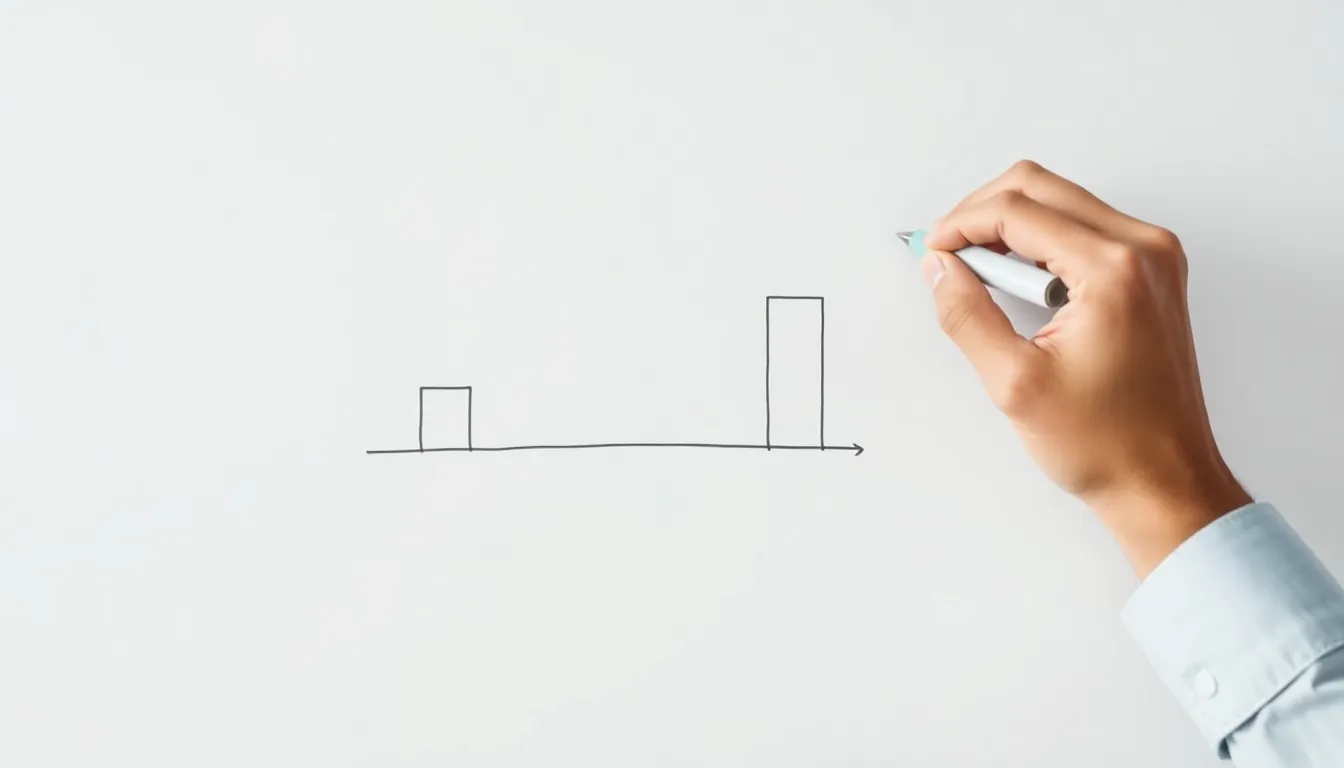
Bar models visually represent equations using rectangular bars.
2
Understanding Unknowns
- Unknowns are represented as missing parts in the bar model.
- Identify what you need to find before drawing the model.
- Common unknowns include quantities, costs, or distances.
3
Basic Addition Equations
- Use bar models to solve equations like x + 3 = 7.
- The total length of the bar represents the sum.
- Subtract known parts to find the unknown value.
4
Subtraction Equations
- Bar models help visualize problems like 10 - x = 4.
- The total bar is divided into known and unknown parts.
- Compare lengths to determine the missing value.
5
Multiplication with Bar Models
- Solve equations like 3x = 15 using repeated bars.
- Each bar represents a multiple of the unknown.
- Divide the total by the number of bars to find x.
6
Division Problems
- Bar models show division as splitting into equal parts.
- Equations like x รท 2 = 5 are easily visualized.
- Multiply the known part by the divisor to find x.
7
Combining Operations
- Bar models can handle mixed operations like 2x + 1 = 9.
- Break the problem into addition and multiplication steps.
- Solve step-by-step to isolate the unknown.
8
Real-World Applications
- Bar models are used in budgeting and measurement problems.
- Helpful for comparing quantities in shopping or recipes.
- Enhances problem-solving skills in everyday scenarios.
9
Common Mistakes to Avoid
- Incorrectly scaling bars can lead to wrong solutions.
- Forgetting to label parts clearly causes confusion.
- Always double-check calculations against the model.
10
Summary and Practice Tips
- Bar models make equations visual and easier to solve.
- Practice with simple problems before tackling complex ones.
- Use bar models to verify your algebraic solutions.
1 / 10