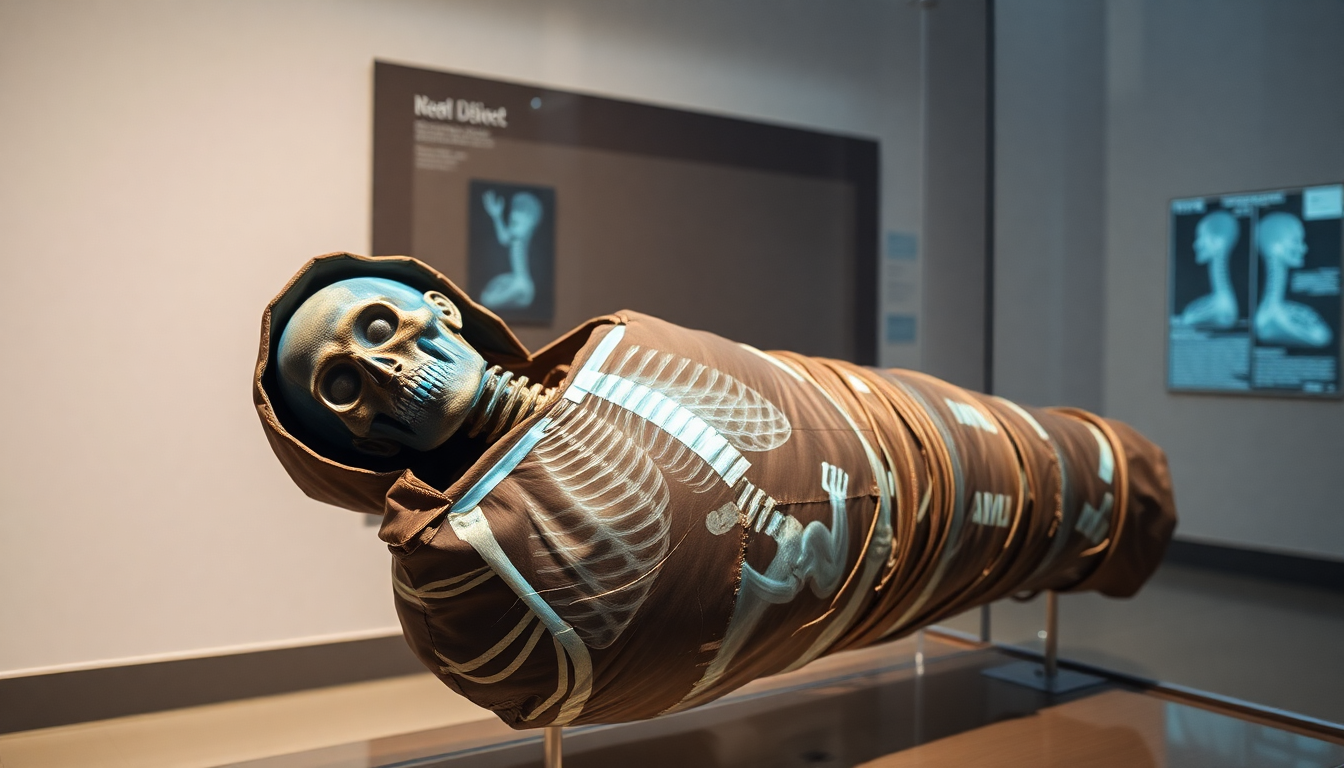
Ancient Egyptian Mummification Process

📑 5 slides 👁 37 views 📅 2/19/2026
0.0 (0 ratings)

Introduction to Mummification

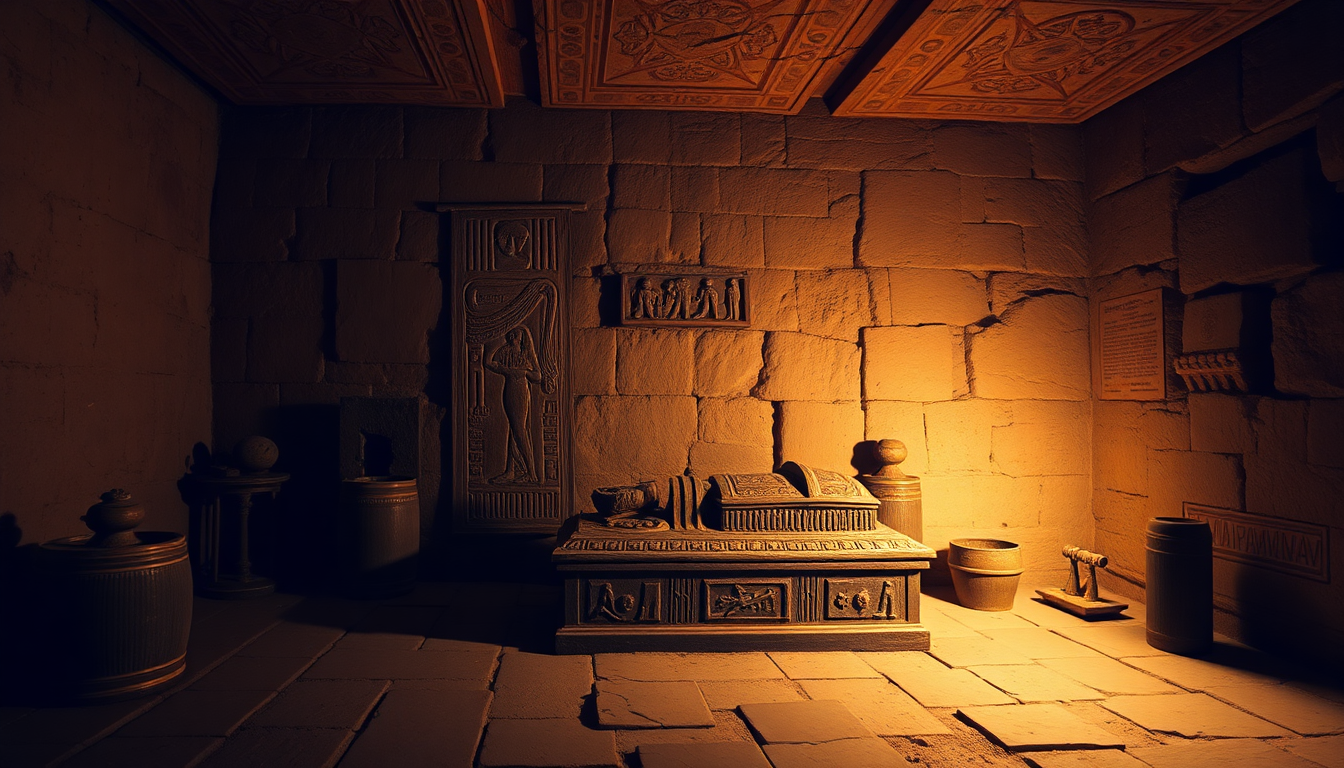
Mummification preserved bodies for the afterlife, a key Egyptian belief.

Introduction to Mummification
2

Step 1: Body Preparation

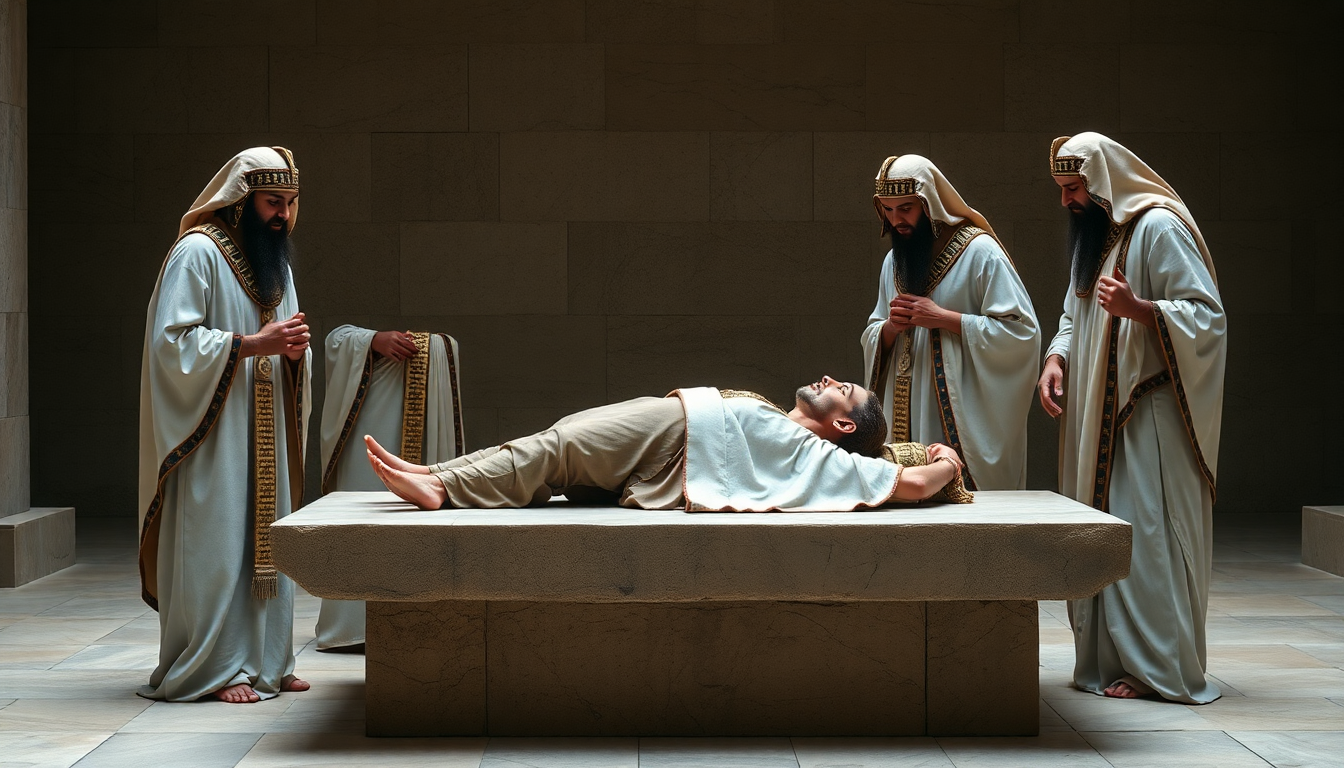
  • Organs removed except heart, believed essential for afterlife judgment.
  • Brain extracted via nose using hooks, considered unimportant.
  • Body washed with palm wine to kill bacteria and purify.
  • Covered in natron salt for 40 days to dehydrate tissues.
Step 1: Body Preparation
3

Step 2: Wrapping & Protection

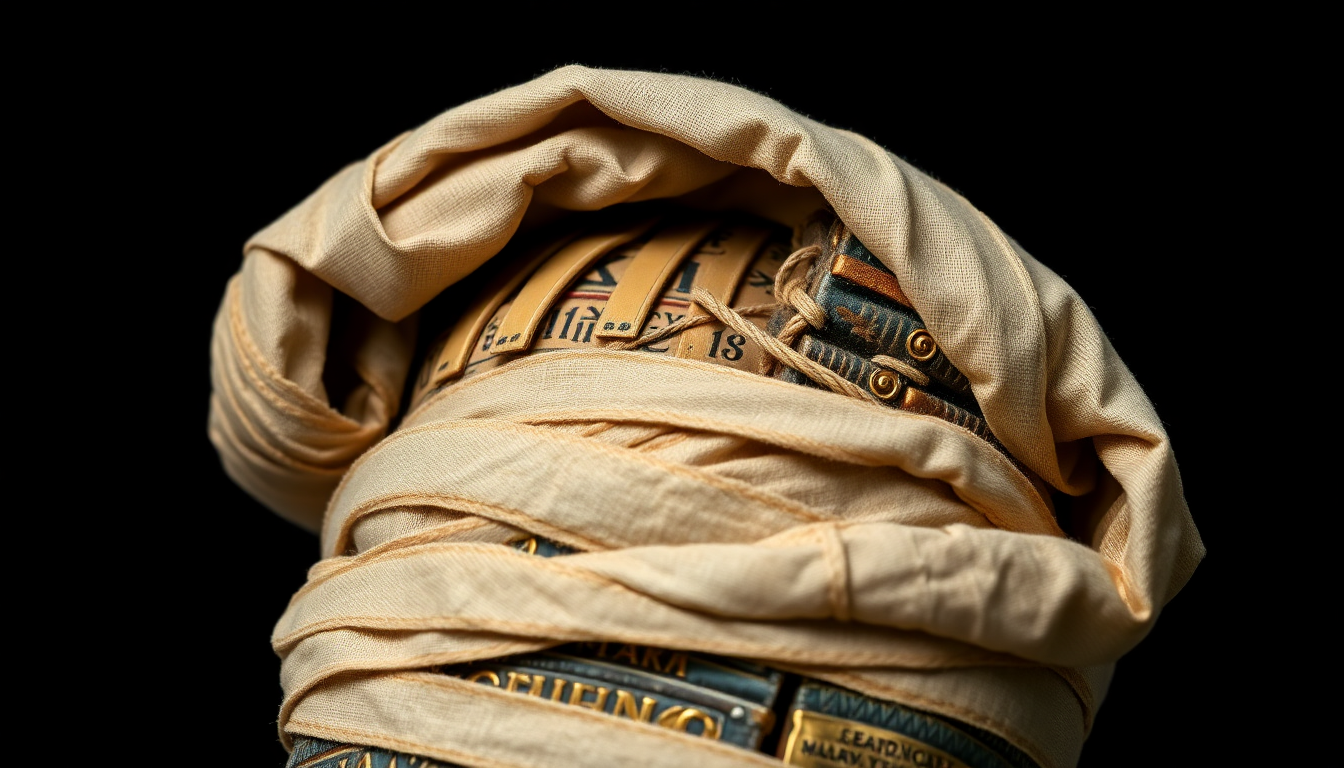
  • Body coated in resins to prevent moisture and seal it.
  • Wrapped in linen strips, with amulets placed between layers.
  • Each layer had prayers and spells for protection in the afterlife.
  • Final shroud depicted Osiris, god of the underworld.
Step 2: Wrapping & Protection
4

Step 3: Final Rituals & Burial

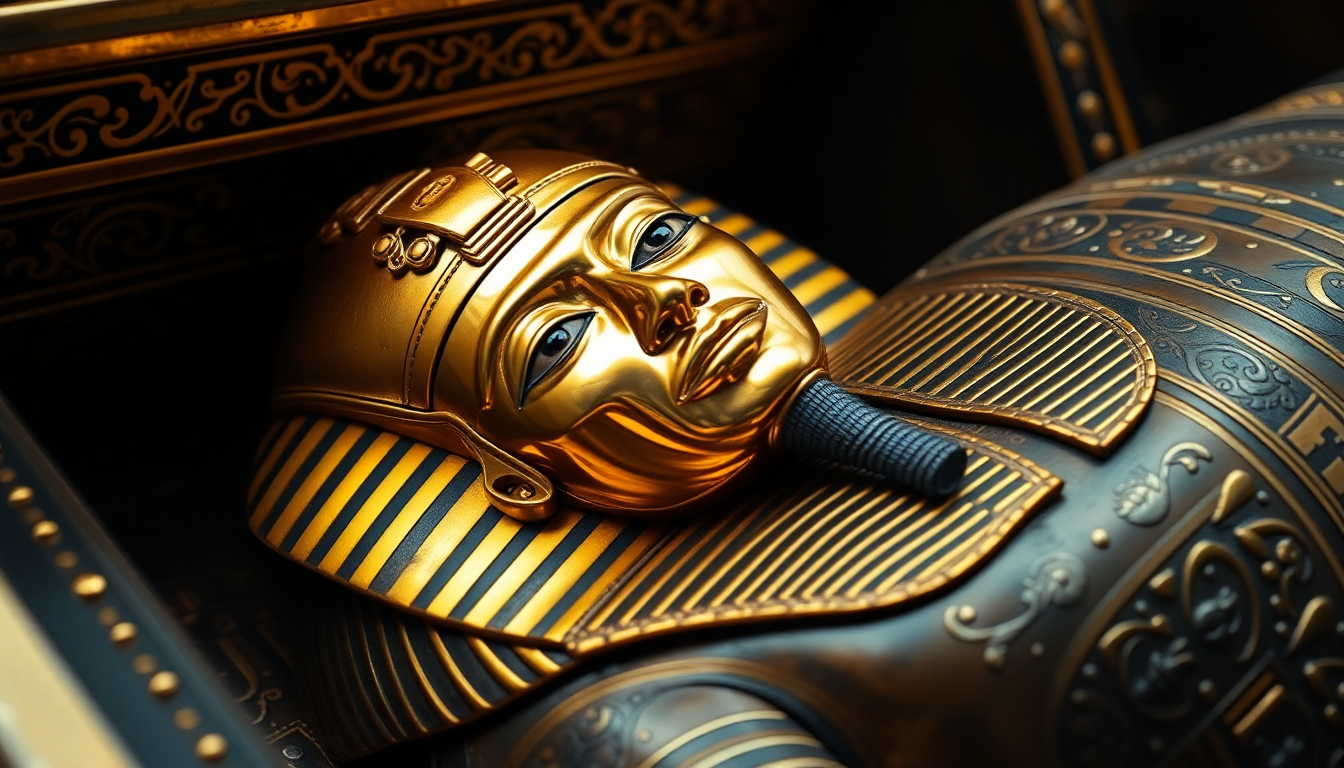
  • Mask placed over face, often gold for pharaohs like Tutankhamun.
  • Body placed in nested coffins, decorated with hieroglyphs.
  • Funeral rites included 'Opening of the Mouth' ceremony.
  • Buried with food, jewelry, and shabtis (servant statues).
Step 3: Final Rituals & Burial
5

Conclusion & Legacy

  • Mummification ensured safe passage to the afterlife.
  • Modern studies reveal advanced techniques and materials used.
  • Preserved mummies provide insights into ancient health and culture.
  • Egyptian methods influenced other civilizations' burial practices.
Conclusion & Legacy
1 / 5