Polymers and Avogadro's Constant in Cambridge AS & A Level
📑 5 slides
👁 19 views
📅 3/15/2026
Introduction to Polymers
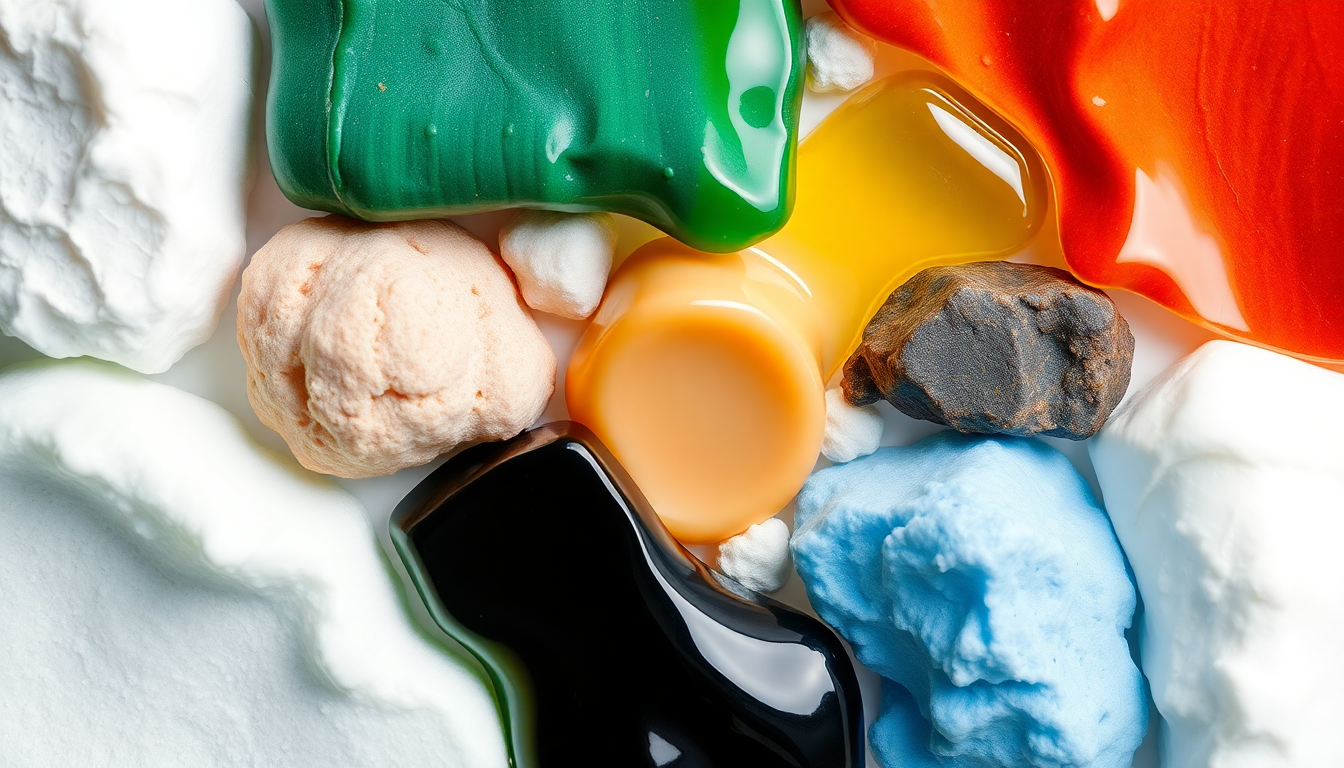
Polymers are large molecules made of repeating subunits called monomers, essential in materials science.
2
Types of Polymers
- Thermoplastics soften when heated and harden when cooled, e.g., PVC and polystyrene.
- Thermosets remain rigid when heated, used in adhesives and coatings, e.g., epoxy resins.
- Elastomers are stretchy polymers like rubber, used in tires and flexible materials.
3
Avogadro's Constant Basics
- Avogadro's Constant (6.022 x 10^23) defines the number of particles in one mole of a substance.
- It bridges atomic-scale measurements with macroscopic quantities in chemistry.
- Used to calculate molar mass, concentrations, and stoichiometric relationships.
4
Applications in Chemistry
- Polymers' molar mass is determined using Avogadro's Constant for synthesis and analysis.
- Stoichiometry relies on the constant to balance equations and predict reaction yields.
- Polymerization reactions use mole calculations to control chain length and properties.
5
Summary and Key Takeaways
- Polymers are versatile materials with diverse applications based on their structure.
- Avogadro's Constant is fundamental for mole calculations in chemical reactions.
- Understanding both topics is crucial for Cambridge AS & A Level chemistry success.
1 / 5