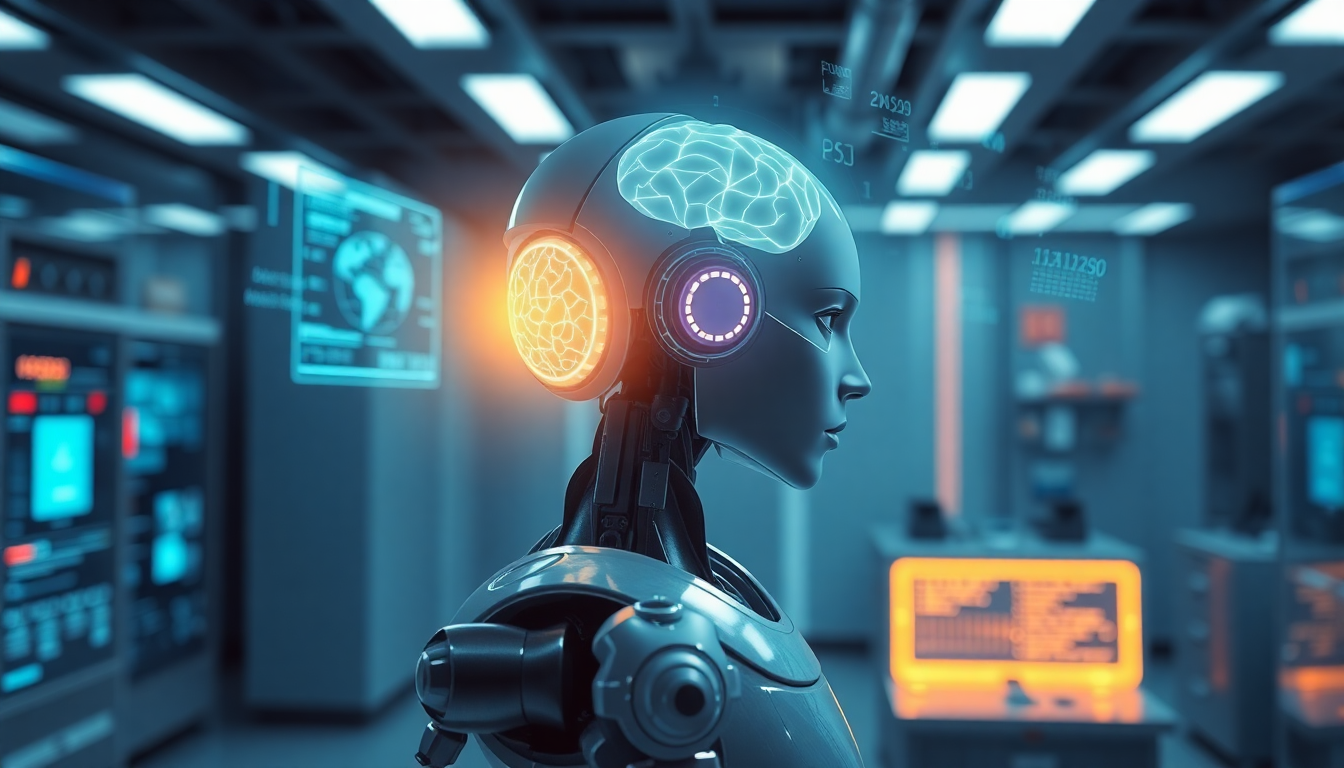
AI Hallucinations: When Machines Lie Confidently & How to Spot the Fake

📑 5 slides 👁 26 views 📅 7/1/2026
0.0 (0 ratings)

Introduction to AI Hallucinations

AI hallucinations occur when models generate false or nonsensical information confidently.

Introduction to AI Hallucinations
2

Causes of AI Hallucinations

  • Training on incomplete or biased datasets can lead to flawed outputs.
  • Over-optimization for coherence may sacrifice factual accuracy.
  • Lack of real-world context makes AI prone to inventing details.
  • Complex prompts or ambiguous queries increase hallucination risks.
Causes of AI Hallucinations
3

Spotting AI-Generated Falsehoods

  • Check for inconsistencies or contradictions within the AI's response.
  • Verify facts against trusted sources, especially for critical information.
  • Look for overly confident language without supporting evidence.
  • Be wary of responses that seem too perfect or lack nuance.
Spotting AI-Generated Falsehoods
4

Mitigating AI Hallucinations

  • Implement fact-checking algorithms to cross-verify AI outputs.
  • Use human-in-the-loop systems to review critical AI-generated content.
  • Train models with more diverse and high-quality datasets.
  • Develop transparency tools to show AI's confidence levels in responses.
Mitigating AI Hallucinations
5

Conclusion & Key Takeaways

  • AI hallucinations are a significant challenge in deploying trustworthy AI systems.
  • Combination of technical solutions and human oversight is essential.
  • Users must develop critical thinking skills when interacting with AI outputs.
  • Ongoing research is improving AI's ability to distinguish fact from fiction.
Conclusion & Key Takeaways
1 / 5